Prepare for the 2027 regulations with GT Smoke Alarms! 🚨
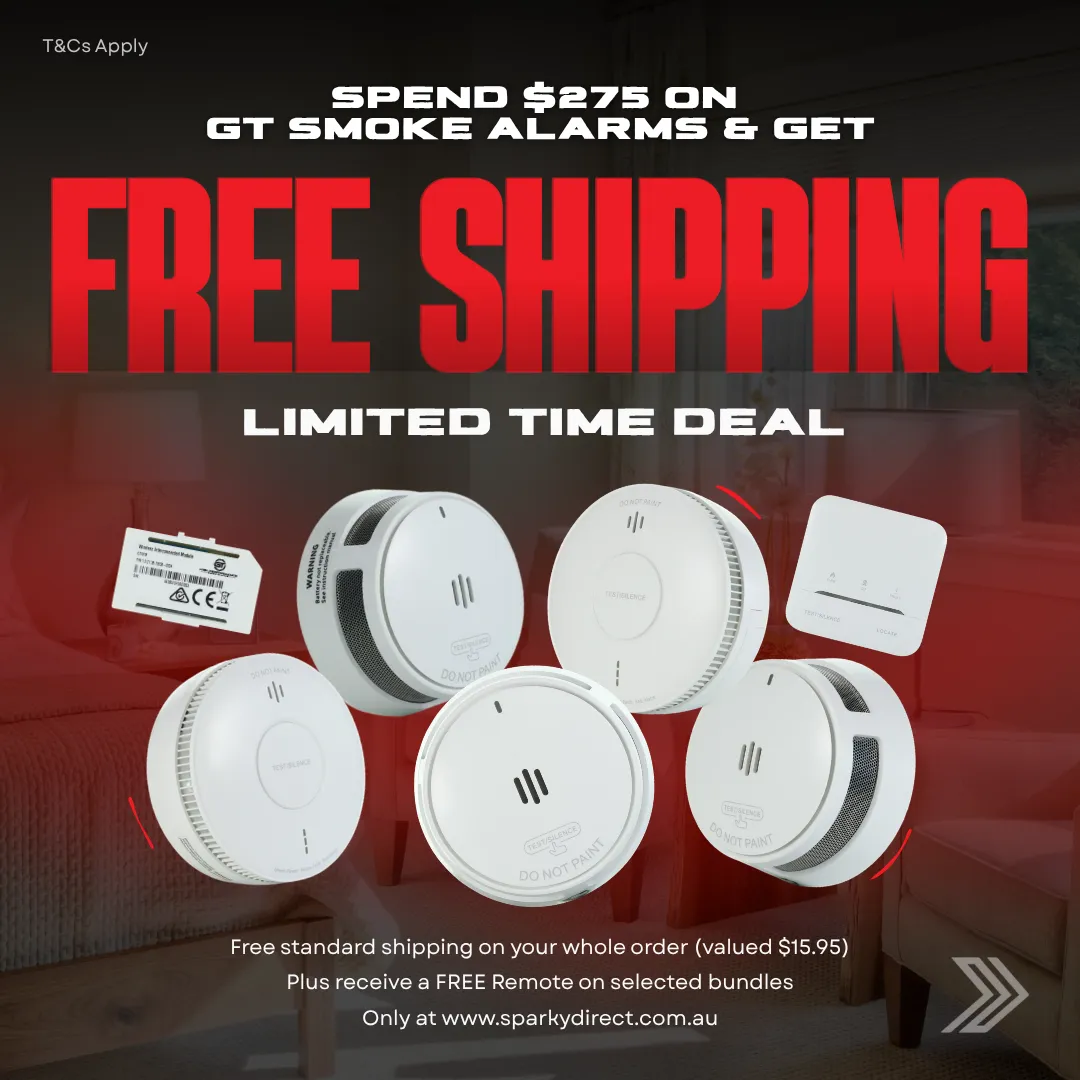
Spend $275 inc. GST on GT Smoke Alarm products in a single transaction and get FREE STANDARD SHIPPING!
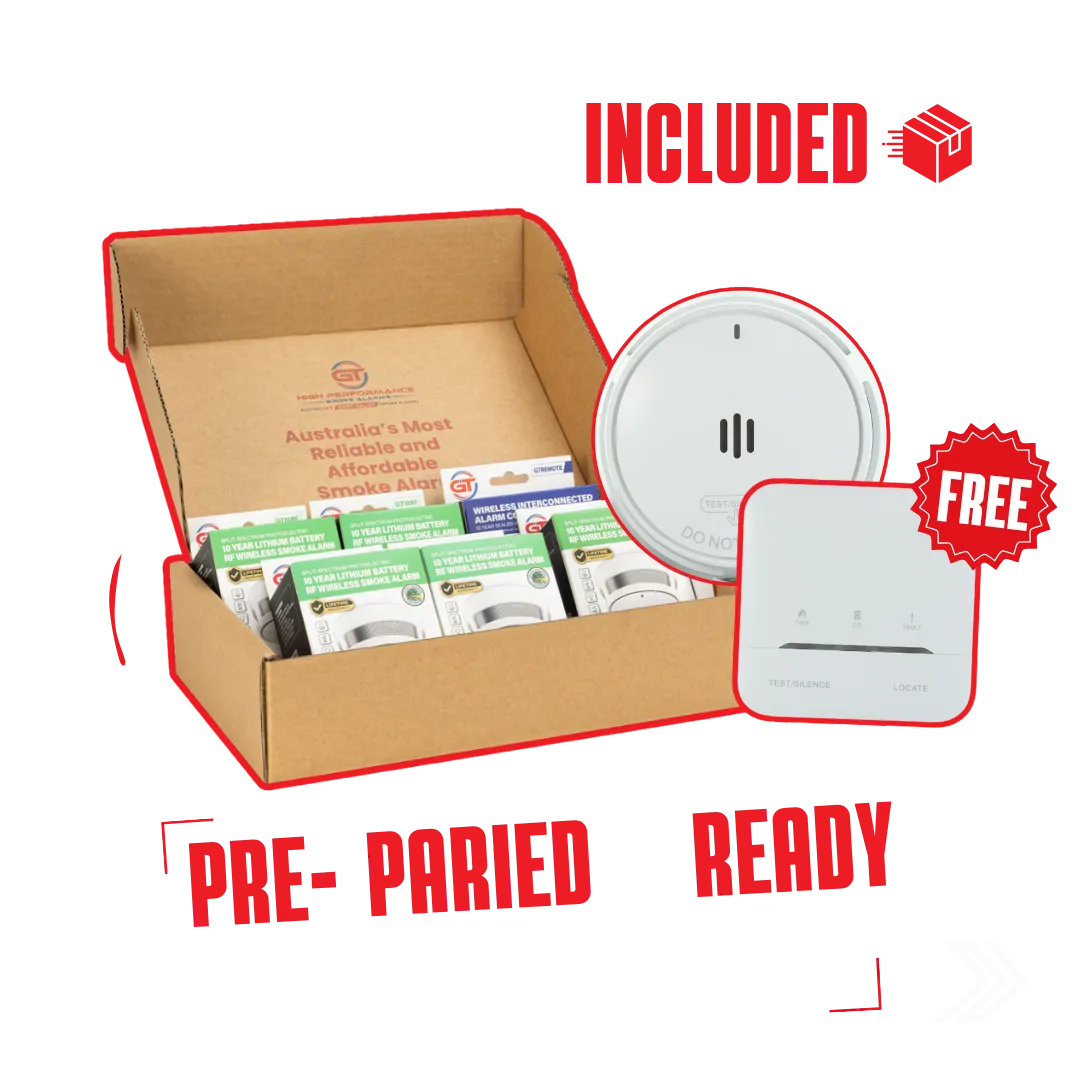
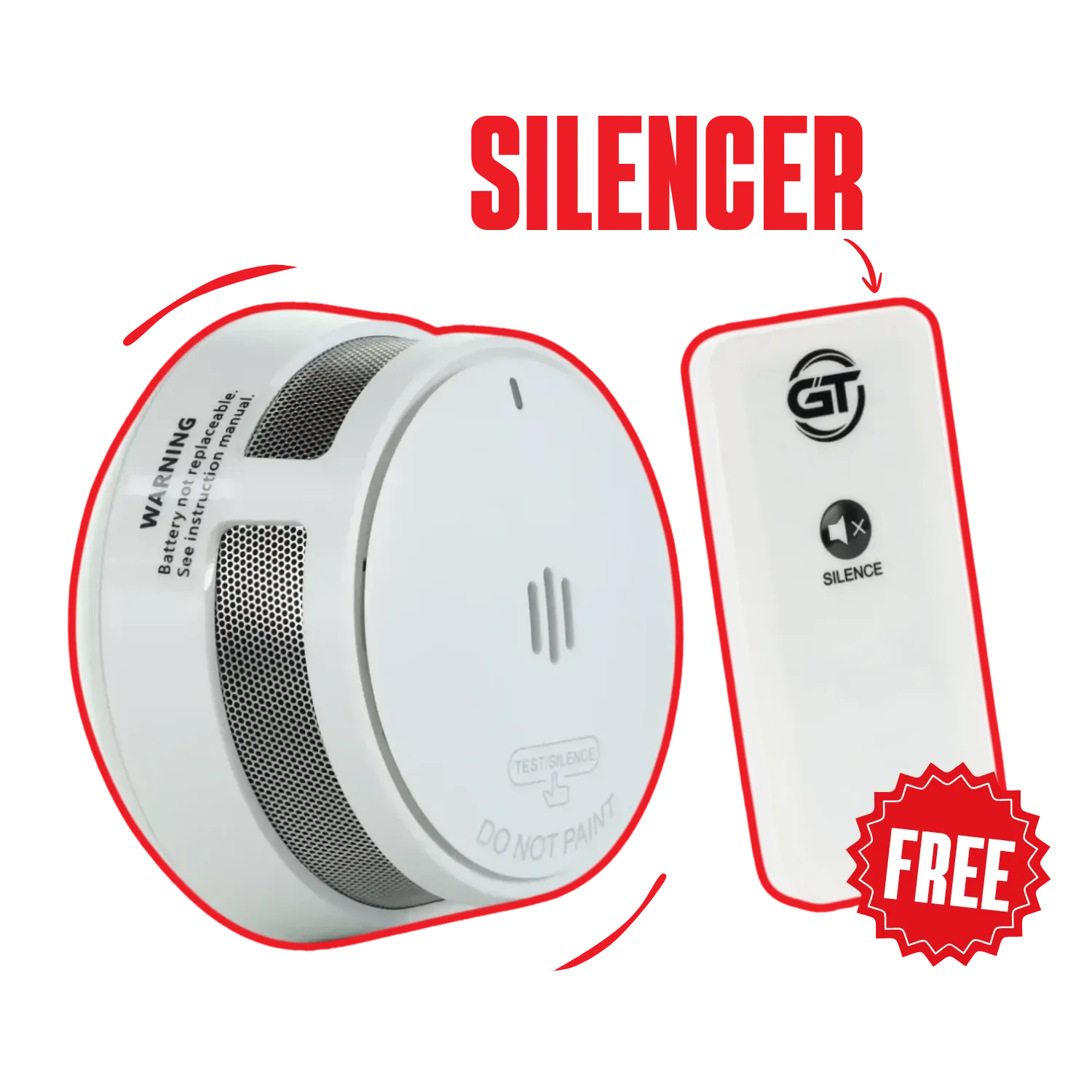
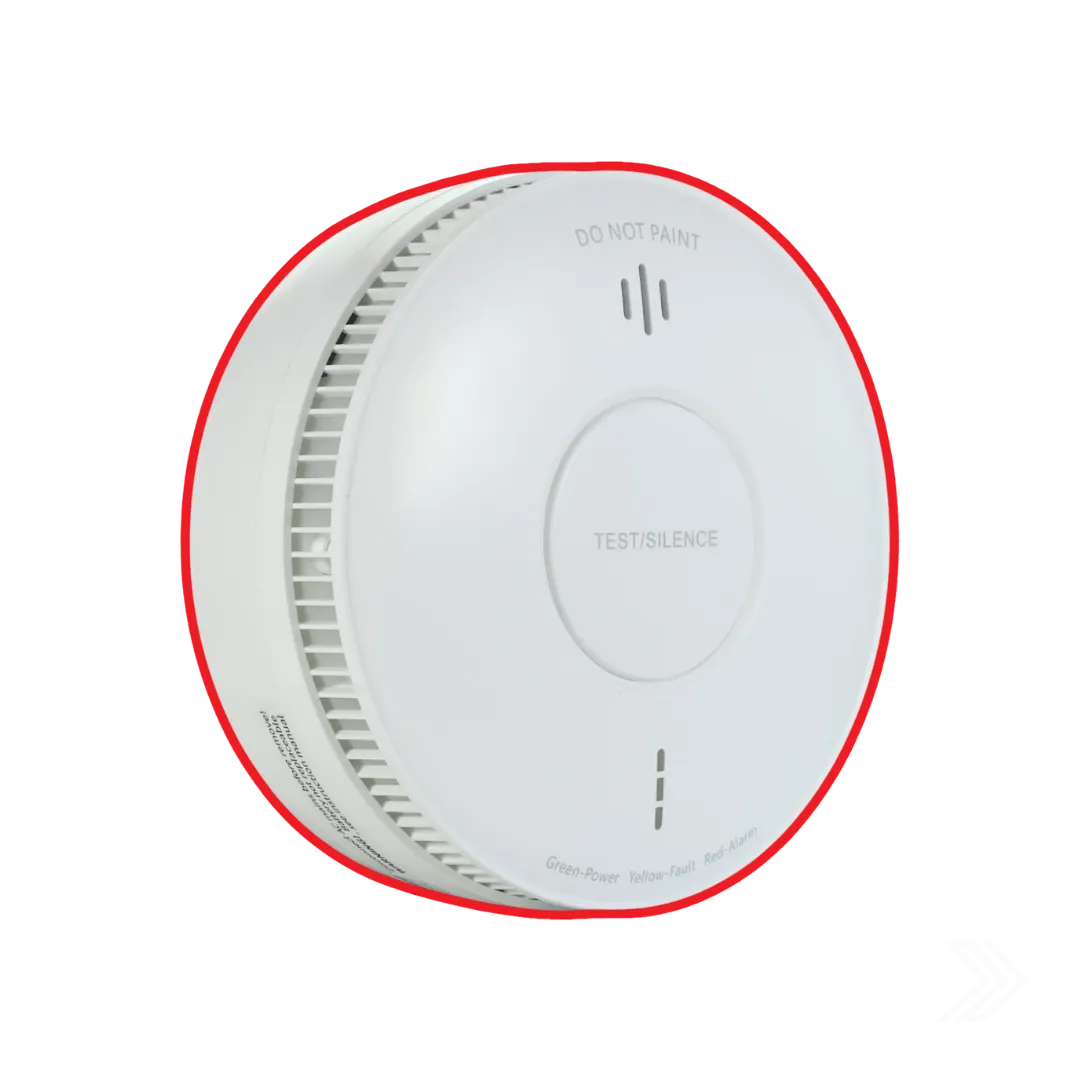
Buy the 5-pack of pre-paired, ready to install GT10RF alarms & get a FREE GT-REMOTE valued at $39.55!
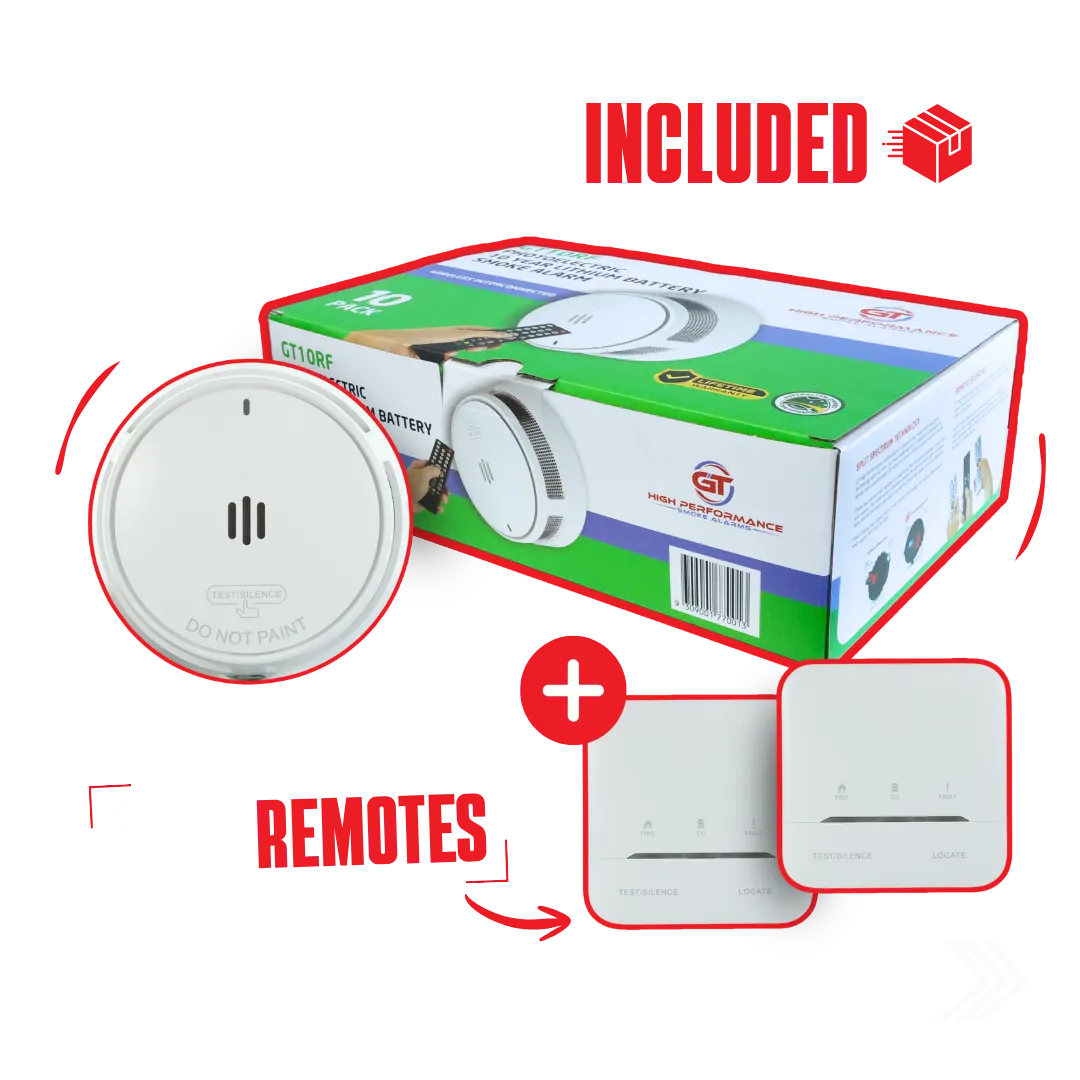
Buy a 10-pack (not-paired) & get TWO FREE GT REMOTES valued at $79.10. Free standard shipping on both!
LIMITED REMOTES & FREE SHIPPING COUPONS - DON'T WAIT!
T&C's Apply.
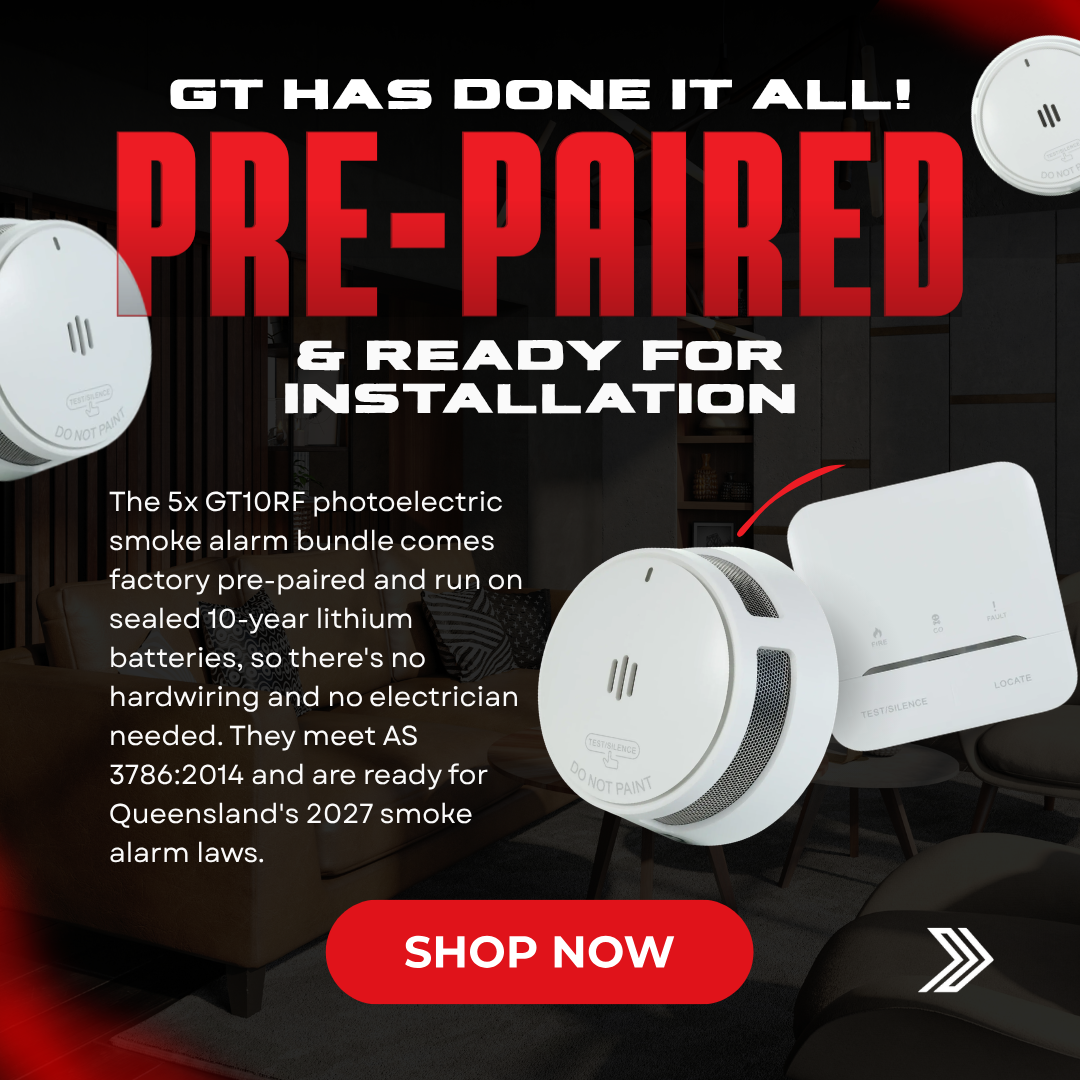
Spend just $275 inc. GST on GT Smoke Alarms, and get FREE standard shipping! Buy the 5-pack of pre-paired GT10RF's & get a FREE GT-REMOTE valued at $39.55! Buy a 10-pack of GT10RF's & get two FREE GT-REMOTES valued at $79.10!
Every private home, townhouse, unit and manufactured home in Queensland must have interconnected photoelectric smoke alarms by 1 January 2027. Here's exactly what that means, where the alarms have to go, and who is responsible.
From 1 January 2027, every private home, townhouse, unit and manufactured home in Queensland must have interconnected photoelectric smoke alarms. Registered caravans and motorhomes need a photoelectric alarm too.
Interconnected means every alarm in the dwelling sounds when one detects smoke — so you hear it in the bedroom even when the fire starts in the garage. Faster detection, earlier warning, more time to get out.
An alarm is only compliant if it passes all four tests. Three out of four is non-compliant.
1. Photoelectric. Responds faster to the slow, smouldering fires that kill people in their sleep.
2. Interconnected. Linked to every other alarm in the dwelling, hardwired or wireless, so they all sound together.
3. AS 3786-2014. Marked on the alarm body — you may need to unclip it from the bracket to read it.
4. No ionisation sensor. Not compliant. The giveaway is a black-and-yellow radiation symbol on the alarm. If it’s there, the alarm has to go.
Quick check: pull the alarm off its bracket and look at the back. No “AS 3786-2014” and no “photoelectric”, assume it needs replacing.
In private homes, townhouses and units, alarms go:
- On every storey.
- In every bedroom, or wherever people sleep.
- In hallways connecting bedrooms to the rest of the dwelling — with no hallway, between the bedroom and the rest of that storey.
- On a bedroom-free storey, at least one in the most likely exit path.
A three-bedroom single-storey house needs four alarms minimum: one per bedroom plus one in the hallway. Two-storey homes need both levels covered, all interconnected.
Queensland Fire Department’s smoke alarm installation checklist (PDF) runs through it room by room.
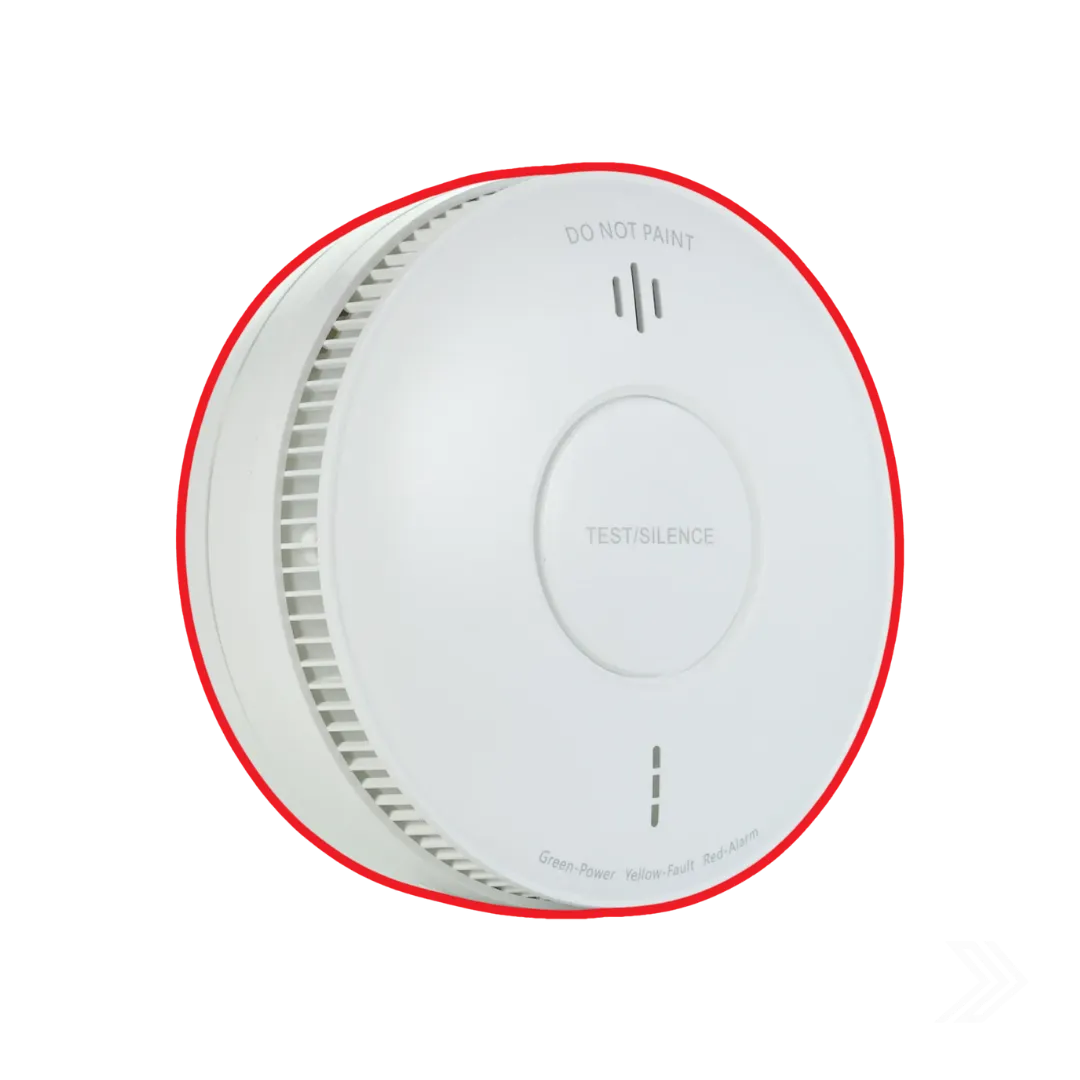
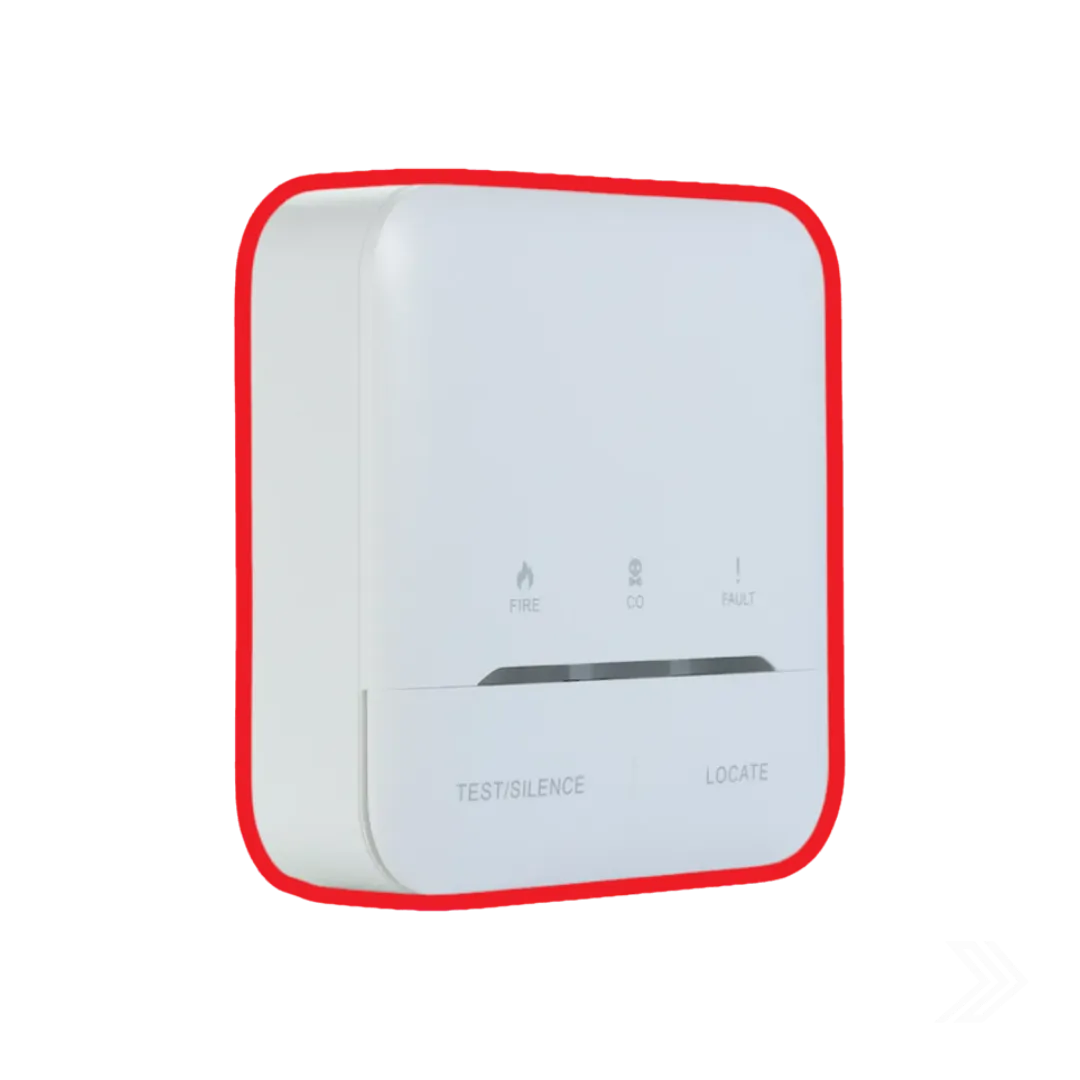
Hardwired 240V alarms are installed by a licensed electrician only. They run off mains power with a backup source (a non-removable 10-year battery or a user-replaceable 9V), interconnect by hardwire or wirelessly, and require a certificate of testing and compliance under s227 of the Electrical Safety Regulation 2013. Best for new builds, renovations, rewires - anywhere the ceiling is already open.
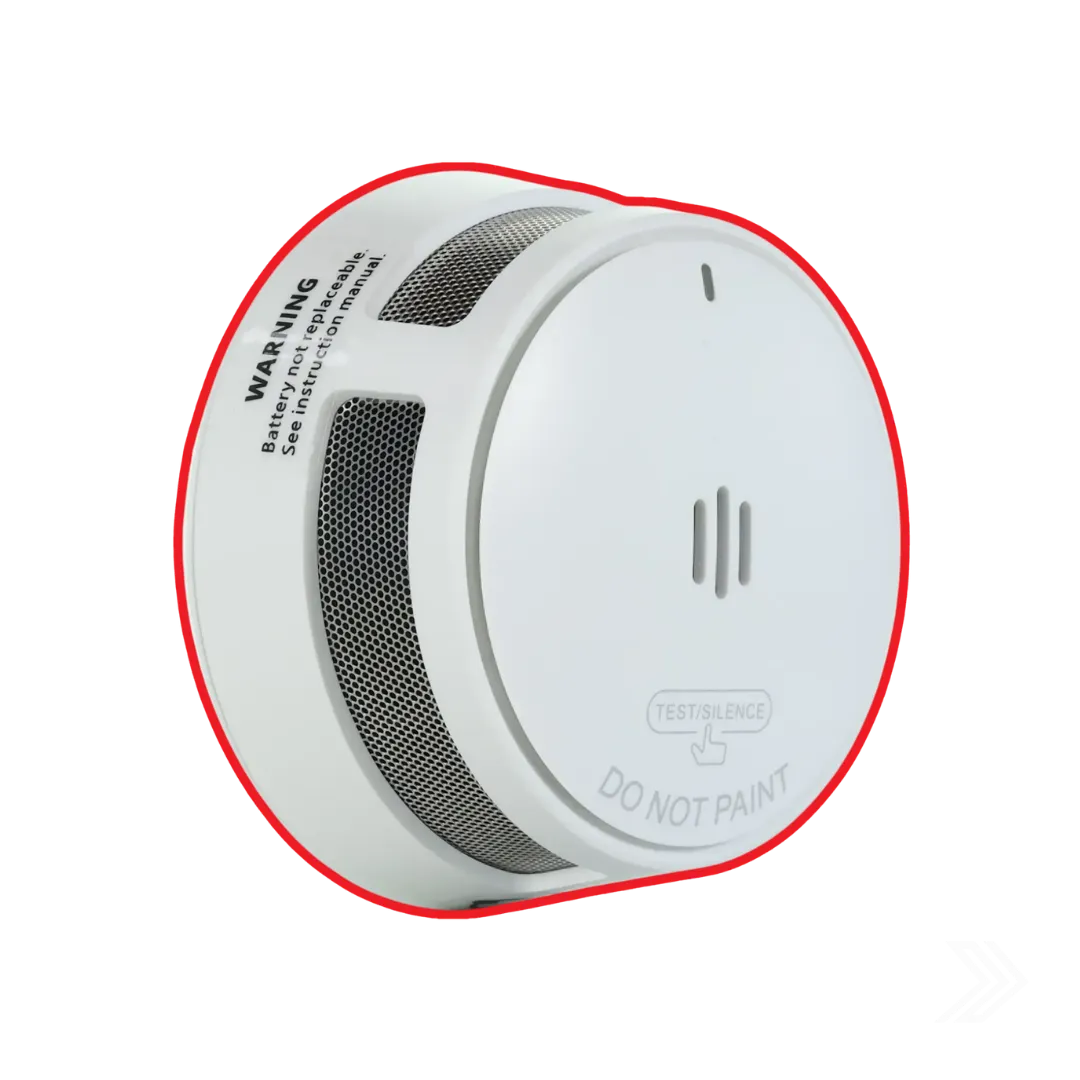
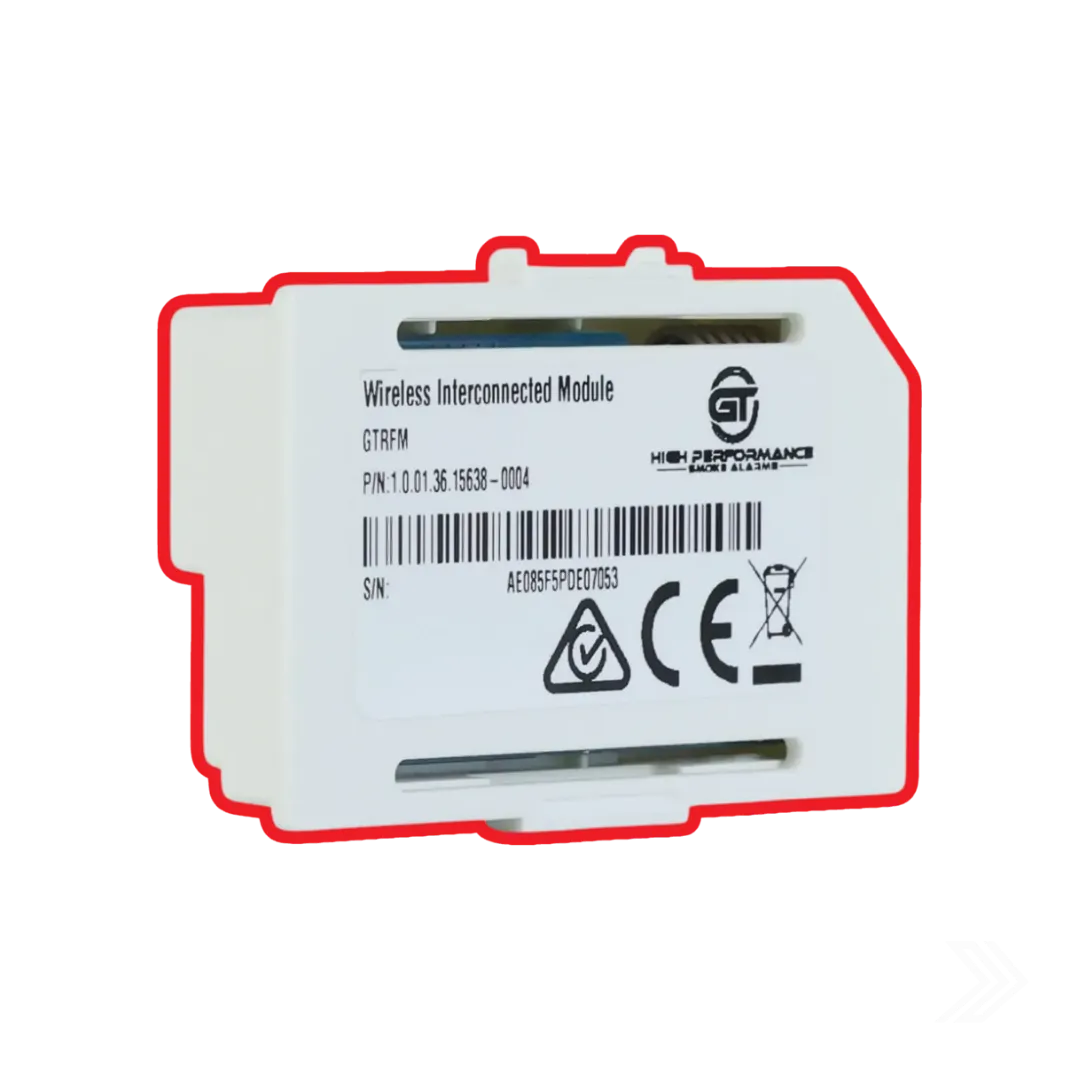
10-year sealed battery alarms you can fit yourself. They run on a non-removable 10-year lithium battery, interconnect wirelessly by RF, and need no paperwork. Best for existing homes and retrofits where you want minimal disruption.
Both options are legal. The choice usually comes down to whether the walls and ceilings are already being opened up.
Important: connecting a hardwired alarm to mains power is electrical work. In Queensland it must be carried out by a licensed electrician - it is not a DIY job. Fitting a battery-powered alarm to the ceiling is not electrical work and you can do it yourself.
Owner occupiers. Interconnected photoelectric alarms throughout by 1 January 2027. Nobody inspects, but the obligation is yours and it bites when you sell.
Landlords. Install compliant alarms, and test and clean every alarm within 30 days before any tenancy starts. Owners proven non-compliant get an infringement notice. Some agents outsource servicing and ask for a “certificate of compliance” - that’s an agency process, not a legal requirement under the Act.
Renters. Your landlord installs them. You test and clean each one at least once every 12 months: press the test button, vacuum or dust per the manufacturer’s instructions. No licence needed. If the alarms aren’t compliant, raise it with Queensland Fire Department.
Selling. Every home or unit sold needs photoelectric interconnected alarms. The trigger is the date the initial sale contract is signed, and it’s applied to every contract since 31 December 2021. The seller upgrades before transfer and declares it on the Form 24 Property Information (Transfer), usually prepared by the conveyancer.
Building or renovating. New homes and renovations under building approval need alarms to the National Construction Code and Building Regulation 2021, signed off by the building certifier.
Caravans and motorhomes - Since 1 July 2024, any caravan or motorhome commencing or transferring Queensland registration needs a photoelectric alarm fitted to the ceiling. From 1 January 2027 that extends to every other Queensland-registered van. QFD also recommends an alarm in the annexe if you sleep in it, and fitting unregistered vans and mobile homes.
Manufactured homes - Changes to s148K of the Fire Services Act 1990 took effect 6 December 2025. If you own a manufactured home in a residential park and sell it, or transfer your interest in the site agreement, you must give written notice stating whether it has compliant alarms. The notice goes in the sale agreement, or the form of assignment for a transfer of interest. It applies even with no site agreement changing hands and no sale - transferring an interest to a partner when moving into aged care, for example.
Alarms only save lives if they’re maintained. Press the test button regularly, and vacuum or dust them so the sensor chamber stays clear.
Nuisance alarms from cooking or steam are annoying, but never pull the battery or disable the interconnection to shut one up. A disabled alarm is the same as no alarm, and people have died in homes where the alarms were silenced. If one goes off repeatedly for no reason, move it or replace it - don’t switch it off.
Worth knowing: the fire service can’t disable a sounding alarm in an unattended home. If yours goes off while you’re away, only you or your electrician can fix it.
Set a reminder for the replacement date. Smoke alarms last around 10 years from the date of manufacture, stamped on the unit.
Do I have to register my alarms or notify anyone? No. Queensland Fire Department does not need to be told about your smoke alarm compliance. You will, however, need to show you have complied when you sell.
Can I still use battery-powered alarms? Yes, provided they are photoelectric, interconnected, AS 3786-2014 compliant and powered by a non-removable 10-year battery. Alarms with user-replaceable 9V batteries as their primary power source do not meet the requirement for new installs.
My house has a mix of hardwired and battery alarms. Is that a problem? Not necessarily. Because the Building Regulation 2021 governs new dwellings and the Fire Services Act 1990 applies retrospectively to existing ones, mixed installations are common and legitimate. When you replace an expired or faulty alarm, replace it with the type that applied at the time of construction. All alarms still need to be photoelectric and interconnected by 1 January 2027.
Do I need a certificate of compliance? Only for hardwired work. A licensed electrician installing hardwired alarms issues a Certificate of testing and compliance under s227 of the Electrical Safety Regulation 2013. The "certificate of compliance" some rental agents request from servicing companies is an internal agency process, not a legal requirement.
Can interconnected alarms be wireless? Yes. Wireless RF interconnection is accepted and is usually the practical choice in an existing home, since it avoids running new cable through finished ceilings.
I'm deaf or hard of hearing. Is there help available? Queensland Fire Department funds the Deaf Connect Smoke Alarm Subsidy Scheme to help with specialty alarms. Contact Deaf Connect on 07 3892 8500 or smoke.alarms@deafconnect.org.au to check eligibility.
Source: Queensland Fire Department, Smoke alarms, last updated 29/10/2026.